
There’s comfort food… and then there are black-eyed peas that completely reset the bar. These vegan black-eyed peas aren’t just another simmered pot of beans — they’re a fragrant, elegant, soul-warming dish that surprises you in the best possible way. Slow-cooked with sautéed aromatics, white wine, and a tarragon, they develop a depth of flavor that’s earthy, herbal, and almost luxurious. Truly unlike any black-eyed peas you’ve had before.
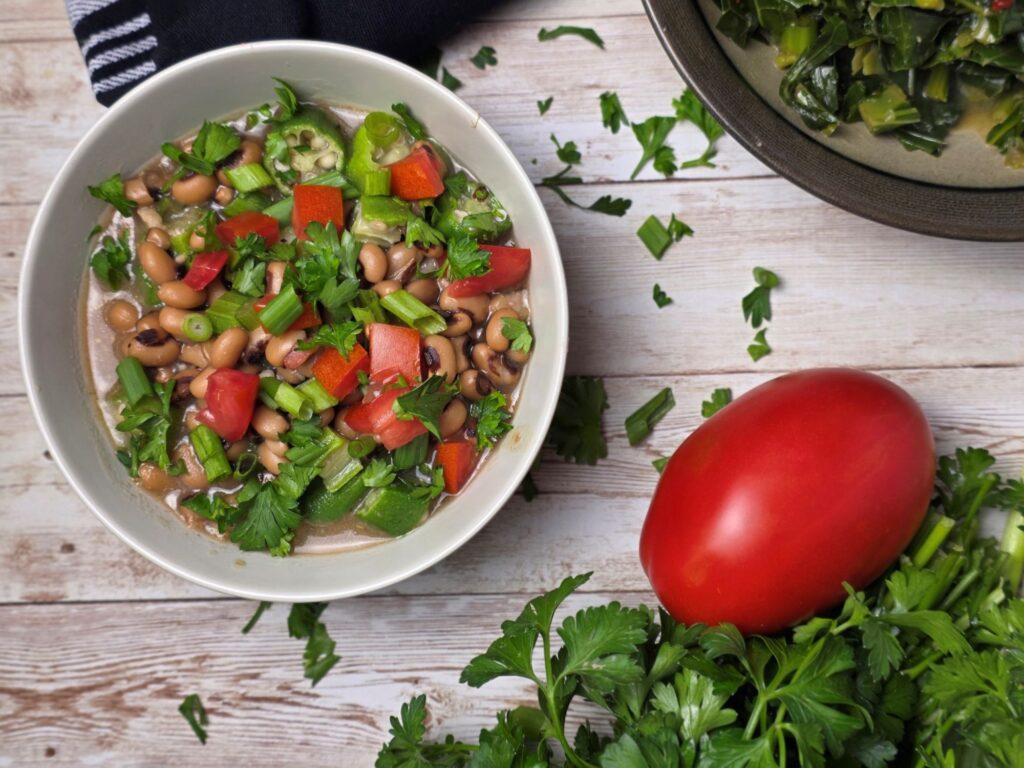
There’s nothing quite like a pot of black-eyed peas simmering on the stove — the aroma, the warmth, the promise of comfort in every bowl. This vegan version takes everything you love about traditional Southern black-eyed peas and transforms it into a plant-powered classic that’s just as hearty and satisfying.
The white wine brightens the broth and gives the peas a subtle complexity, while the tarragon adds an herby sweetness that plays beautifully with their natural creaminess. No meat needed, no shortcuts taken — just patient simmering, thoughtful seasoning, and simple ingredients coming together in a way that feels both comforting and elevated.
Whether you’re making them for New Year’s tradition, a cozy Sunday meal, or a nourishing weeknight dinner, these black-eyed peas will make you rethink what this humble ingredient can do. One bowl and you’ll understand: this is the vegan black-eyed pea recipe you’ll crave long after the pot is empty.
Ingredient Notes for The Best Vegan Black Eyed Peas
Black Eyed Peas: Black-eyed peas are the heart of the recipe — creamy, earthy, and deeply comforting. Soaking helps them cook evenly and shortens the simmer time. Nutritionally, they’re rich in plant-based protein, fiber, folate, iron, and magnesium. They support steady energy, digestive health, and blood sugar balance, making them a nutrient-dense base for a vegan meal.
Celery: Celery adds aromatic depth and a subtle savory backbone that enhances the broth. It also supplies vitamins A and K, antioxidants, and hydrating minerals. As it cooks, it softens into the peas and helps build that classic, comforting flavor foundation.
White Onion: Onions bring sweetness, richness, and natural umami as they caramelize and melt into the mixture. They also offer prebiotic fibers that support gut health and antioxidants like quercetin, which has anti-inflammatory benefits.
Frozen Okra: Okra adds tender texture and a hint of natural thickening, giving the broth a silky, stew-like consistency. It’s rich in fiber, vitamin C, and folate, and is known for supporting digestive health. Frozen okra works perfectly here — it’s convenient and captures peak nutrition.
Green Scallions: Scallions add a bright, fresh pop of flavor on top. They elevate the peas with a subtle oniony sharpness. Nutritionally, scallions offer antioxidants and vitamin K while keeping the garnish light and refreshing.
Garlic: Garlic infuses the dish with warmth and depth. It contains allicin, known for its antimicrobial and heart-supportive properties. When sautéed, it becomes mellow and aromatic, forming a critical layer of flavor in the base of the recipe.
Roma tomatoes: Fresh Roma tomatoes add color, acidity, and juiciness to balance the creamy peas. They’re rich in vitamin C, potassium, and lycopene — a powerful antioxidant linked to heart and skin health.
Tarragon: Tarragon is the ingredient that sets this recipe apart. It brings a delicate sweetness with hints of anise, elevating the entire dish and giving it an unexpected, almost elegant twist. Tarragon contains antioxidants and small amounts of minerals like manganese.
White wine: White wine adds brightness, acidity, and depth. As it reduces, it leaves behind subtle fruity and floral notes that enhance the peas’ earthy flavor. Most alcohol cooks off, leaving complexity without heaviness. It also helps deglaze the pan, pulling up all the flavor from the aromatics.
Bay Leaves: Bay leaves contribute an herbal, comforting aroma that rounds out the broth with understated complexity. They’re rich in phytonutrients and help bring all the savory elements together as the peas simmer.
Apple Cider Vinegar: ACV adds tang and liveliness at the end of cooking. It sharpens the flavors, balances richness, and brightens the overall dish. Nutritionally, it may support digestion and blood sugar control, and in this recipe it helps create a beautifully layered finish.
Preparation Notes
• Soak the peas for even cooking.
An overnight soak (or at least 4–6 hours) helps the black-eyed peas cook more quickly and evenly. It also makes them easier to digest and gives them that creamy-but-still-intact texture you want.
• Build the flavor slowly.
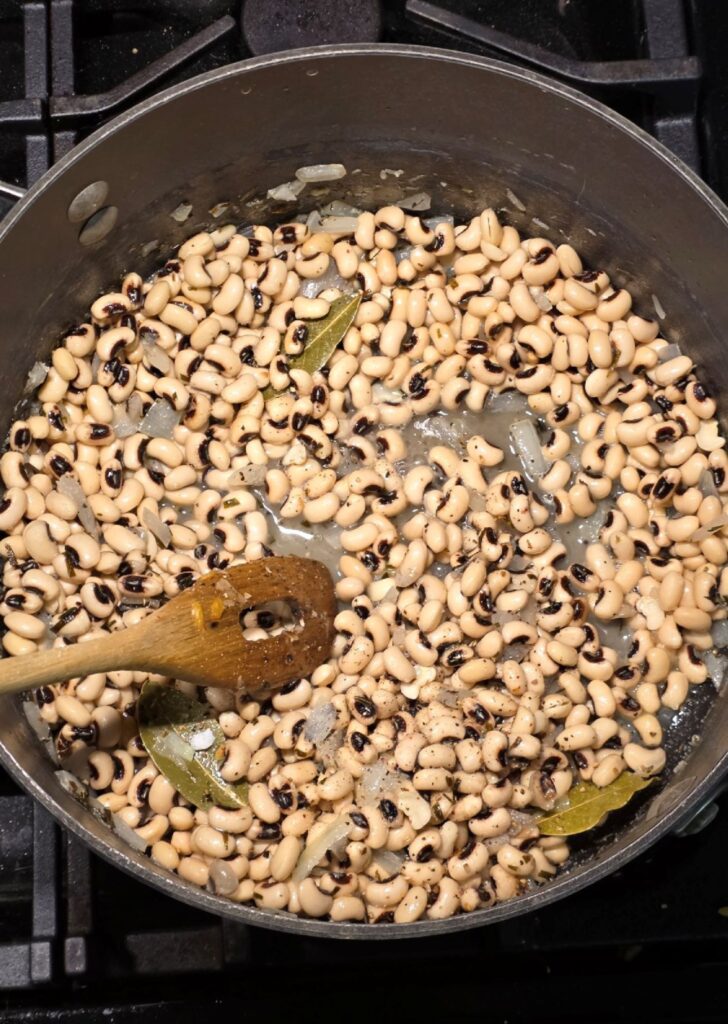
Start by sautéing the onions, celery, and garlic until they soften and turn aromatic — this is the foundation of the entire dish. Let the vegetables get a little golden around the edges to deepen the flavor.
• Deglaze with the white wine.
When you pour in the wine, use a wooden spoon to scrape the bottom of the pot. This releases all the browned bits from the vegetables and infuses the broth with beautiful complexity.
• Don’t rush the simmer.
Black-eyed peas shine when simmered gently. Keep the heat low and allow them enough time to soften and soak up all the flavor from the aromatics, herbs, and wine.
• Add the apple cider vinegar at the end.
A splash of ACV at the finish brightens the whole pot. Adding it too early can mute its acidity, so save it for the last few minutes.
• Adjust seasoning to taste.
The final flavor can vary depending on your wine, your peas, and even your vegetables. Before serving, taste for salt, pepper, acidity, and herbs — the right balance makes the dish sing.
Serving Notes
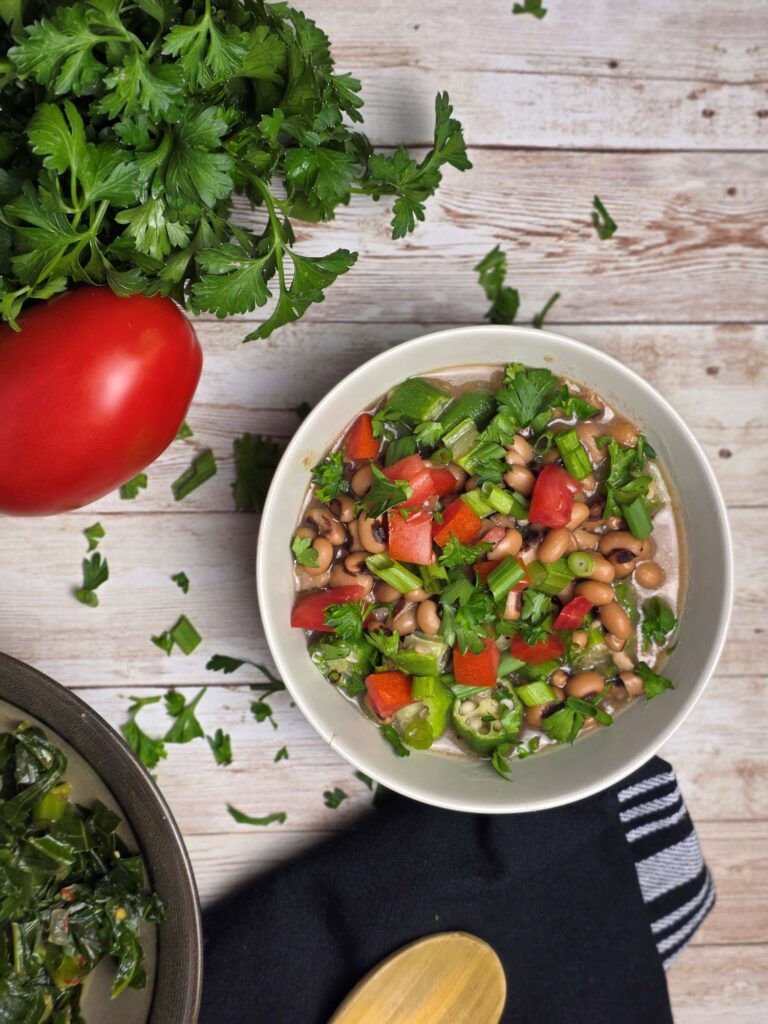
• Top with scallions and fresh tomatoes.
That little hit of freshness on top contrasts beautifully with the creamy peas. It makes each bowl feel lighter, brighter, and more layered.
• Pair with rice, quinoa, or crusty bread.
Black-eyed peas and grains are a classic match. Over rice or quinoa, this becomes a filling, protein-rich bowl. With crusty bread, you get the perfect tool for scooping up the silky broth.
• Add a squeeze of lemon or a dash of hot sauce.
A hint of acidity or heat right before serving can enhance the herbal tarragon and bring all the flavors forward.
• Serve as a main or a hearty side.
These peas are satisfying enough for a full meal but also pair beautifully with collard greens, cornbread, roasted vegetables, or sautéed cabbage.
• Even better the next day.
Like most bean dishes, the flavors deepen as they sit. Store the peas in their broth overnight — they reheat beautifully and make an easy, nourishing meal throughout the week.

The Best Vegan Black Eyed Peas
Course: SidesDifficulty: Easy6
servings15
minutes45
minutesIngredients
8 oz black eyed peas, soaked and drained
2 celery ribs, diced
1 cup diced onion
2/3 cup frozen okra
2-3 scallions, chopped
2 garlic cloves, minced
2 Roma tomatoes, diced
32 oz. veggie broth
1 tbsp vegan butter
1 1/2 tsp tarragon
1/2 cup white wine
2 bay leaves
S&P to taste
1 tbsp apple cider vinegar
Directions
- Soak the beans overnight. Rinse and remove any dark beans prior to cooking.
- Add butter to a large pot and heat for 1-2 minutes. Add the onions and celery and cook until translucent. Now add the garlic and tarragon. Cook for another minute or so.
- Add the white wine to the pot and cook for about 2 minutes. Now add the black eyed peas and bay leaves and stir evenly through spice and wine mixture. Add salt and pepper.
- Pour in the broth and bring to a boil. Turn down the heat just slightly and cook for 45-60 minutes, until beans are tender but not mushy. Add more broth or water as needed.
- Turn off the heat and add the okra and apple cider vinegar.
- Allow the mixture to cool slightly and drain most of the liquid out of the pot.
- Serve with fresh scallions and diced tomatoes on top.
